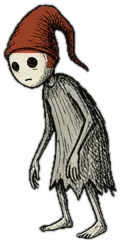
Maps drawn from the reports. None of them shows your house. Your house has never been mapped, which does not mean what you hope it means.


Mildew on top, the wood down one side, the fields below, and the shore past the fields. Each place has its own map.
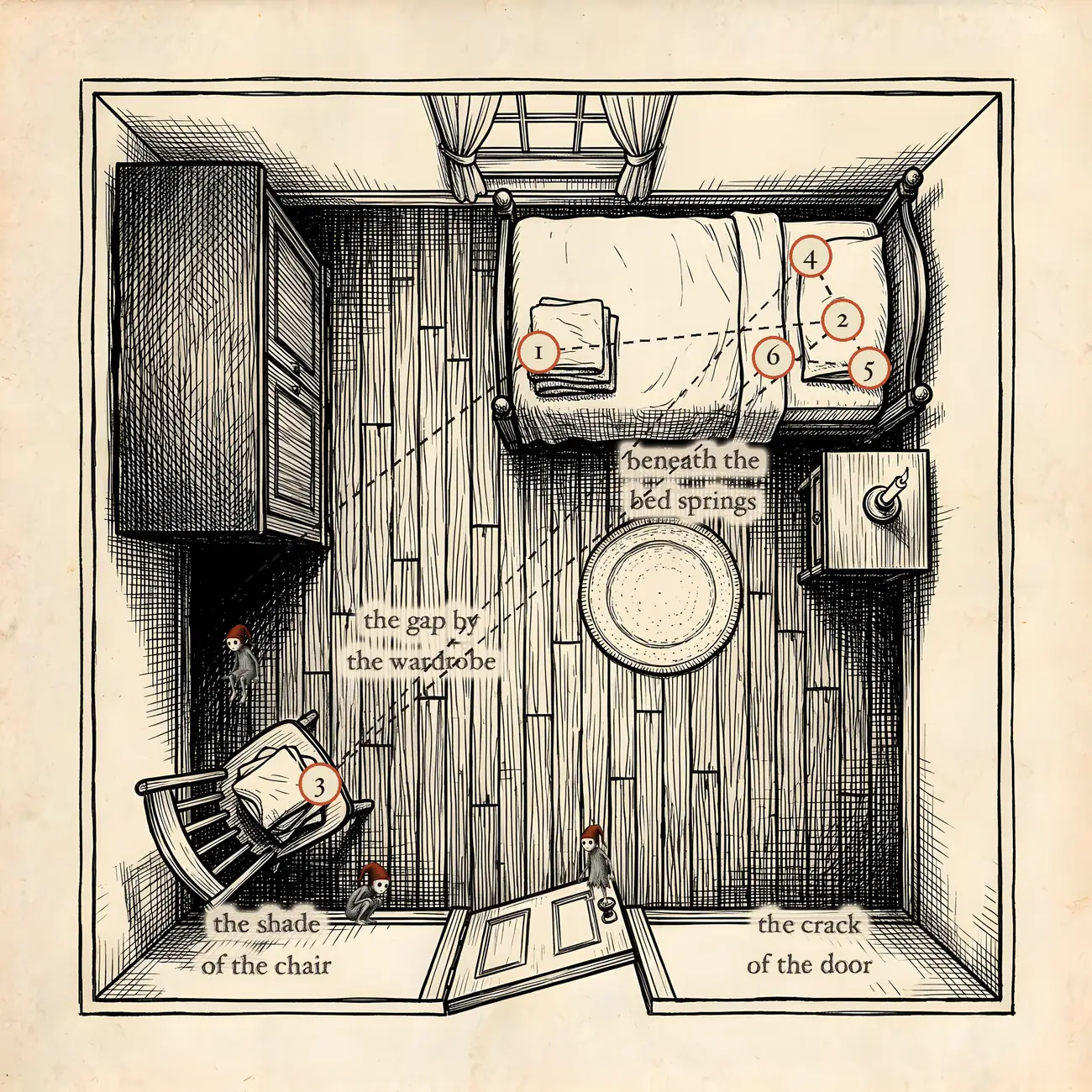

Any bedroom, as a Murkmare sees it. They wait in four places: the gap by the wardrobe, beneath the bed springs, the crack of the door, the shade of the chair. The numbers follow the order of the work, as set down in the Field Guide.
- The foot of the bed: the blankets. (Cold toes.)
- The pillow: the hair. (Knotted hair.)
- The chair: the clothes. (Crumpled clothes.)
- The eyes. (A crust in each eye.)
- The pillow again. (A wet pillow.)
- The chin. (Something you tasted and would rather forget.)
Then back beneath the bed springs before it is light.
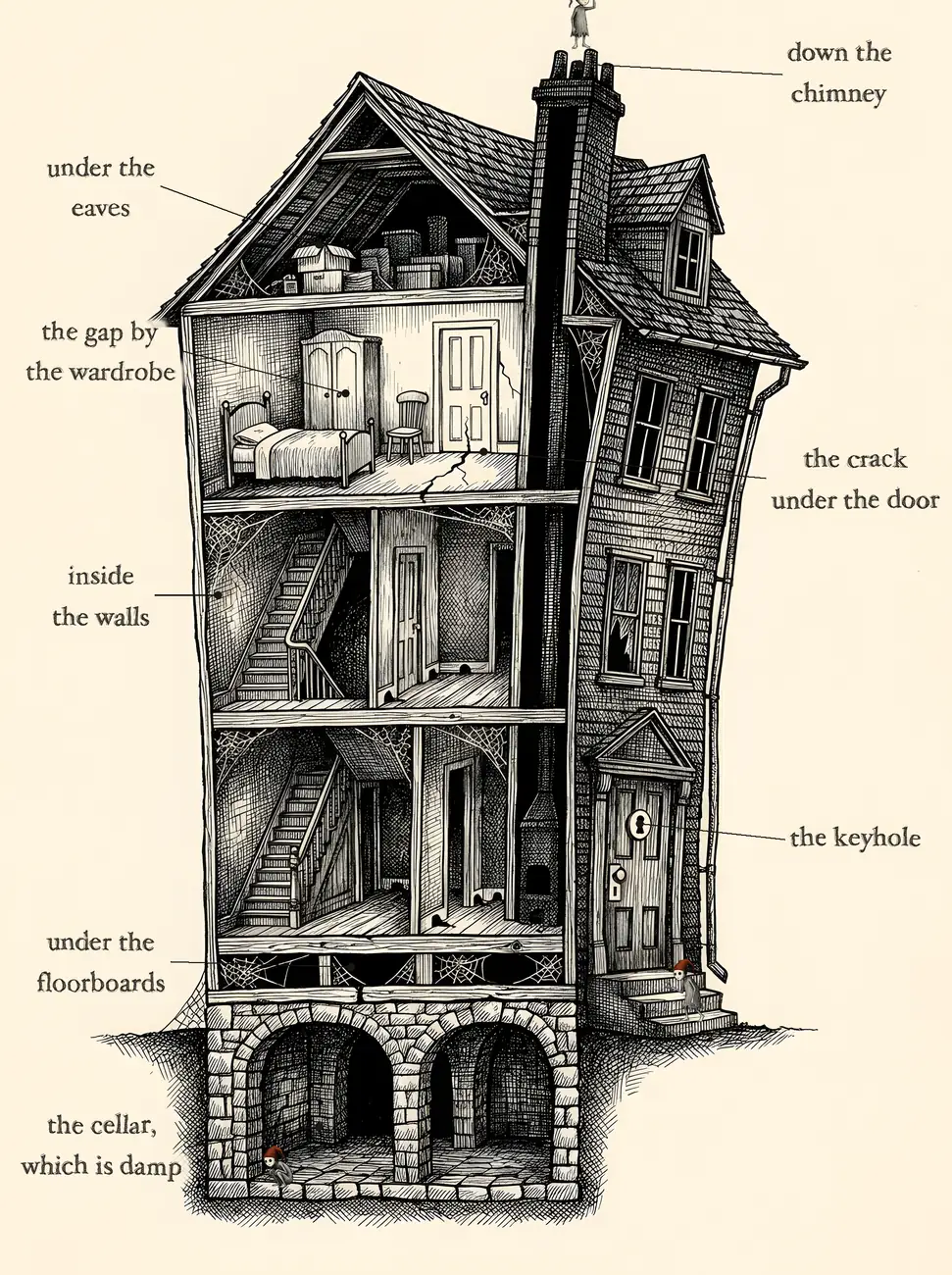

One house in Mildew, cut open so you can see the ways in. A Murkmare never goes inside you. It goes inside everything else.
They come down the chimney, under the eaves, through the keyhole, under the door, through the walls and up between the floorboards, and from the cellar, which is damp. At the end of every way in is the gap by the wardrobe, where they stop and wait.